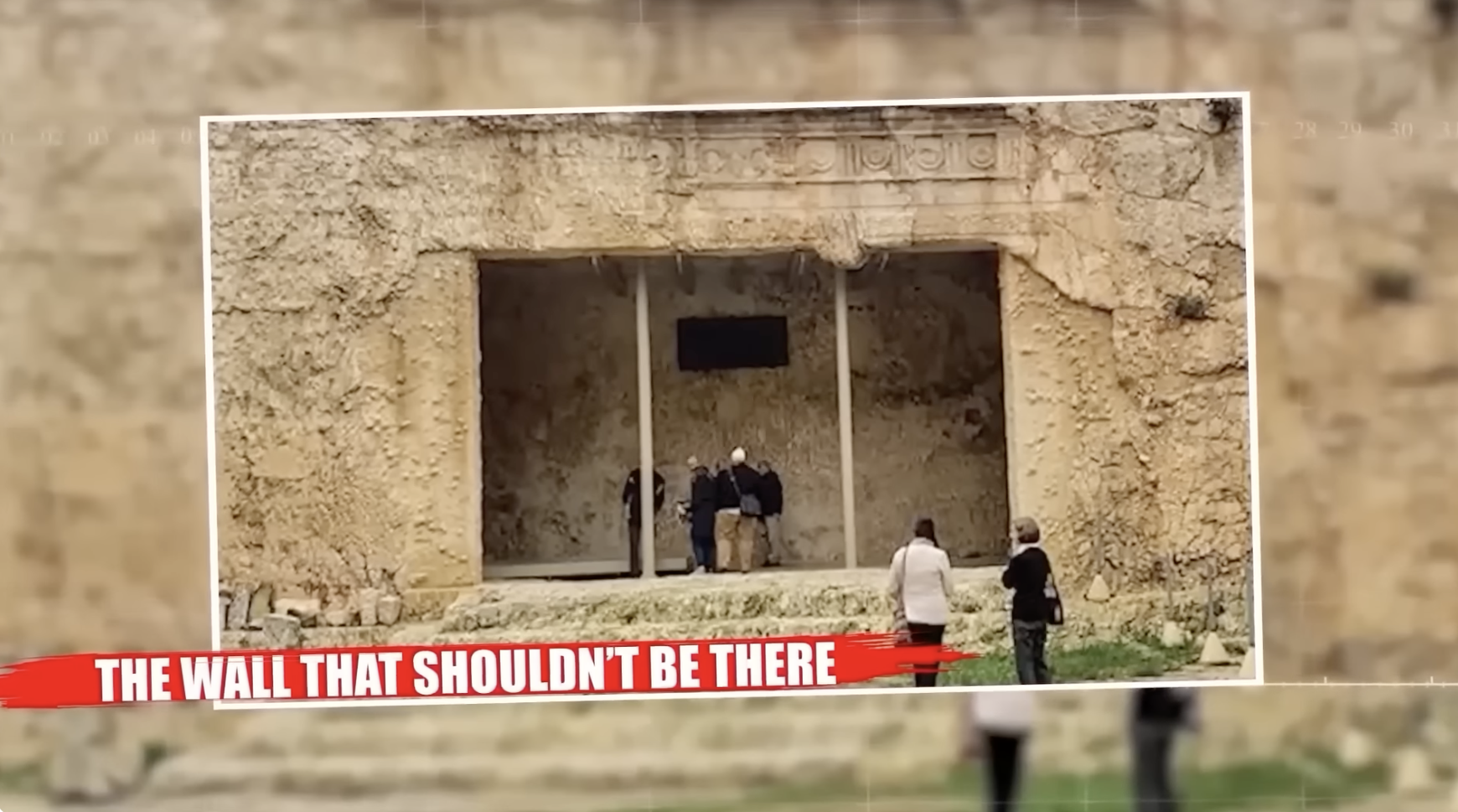
For nearly 3000 years, it was nothing more than a whisper in ancient texts, a royal grave lost to dust, war and time. Then suddenly, everything changed. Archeologists announced they had uncovered what could be the long Lost Tomb of King Solomon, the legendary ruler of ancient Israel, famed for unimaginable wealth, wisdom and the building of the First Temple in Jerusalem. For centuries, historians debated whether Solomon was history or myth. Many believed his burial place would never be found, but deep beneath layers of stone and silence, something extraordinary was waiting. When the sealed chamber was finally opened, experts didn't just find bones and rubble. They discovered inscriptions, artifacts and architectural details that didn't match what scholars expected. The design hinted at Advanced craftsmanship symbols carved into the walls raised new questions about the kingdom's true reach. Even seasoned researchers stood stunned. If this really is Solomon's tomb, it could rewrite parts of ancient history and challenge what we thought we knew about one of the Bible's most mysterious kings, after 3000 years of silence, the past may have finally spoken. So if you're ready to uncover what shocked the experts, hit like and subscribe and let's dive in the discovery of King Solomon's tomb. When archeologist ailat Mazar began excavating near the ancient walls of Jerusalem. She wasn't chasing headlines. She was following clues, carefully comparing layers of Earth with descriptions preserved in biblical texts. What she uncovered was an ancient structure unlike anything around it, massive foundation stones, sealed passages, architecture that didn't match later periods. Then came the moment no one expected.
A heavy stone slab buried for 1000s of years was shifted aside the air that escaped felt trapped in time. This was not just another chamber filled with Pottery fragments as flashlights cut through the darkness, gold reflected back, carvings lined the walls, and deep inside, resting in silence, was a solid gold menorah. For generations, many scholars had dismissed the tomb of King Solomon as legend, a powerful story, yes, but not a physical place waiting to be found. That belief began to crumble. The second light touched the artifacts hidden beneath the city of David, even experienced archeologists admitted they were stunned. No one expected this level of preservation, no one expected symbols that hinted at royal authority. To understand why this discovery matters, you have to understand Solomon himself. Solomon rose to power as a teenager after the death of his father, King David. Instead of simply maintaining the kingdom, he expanded it into a regional powerhouse.
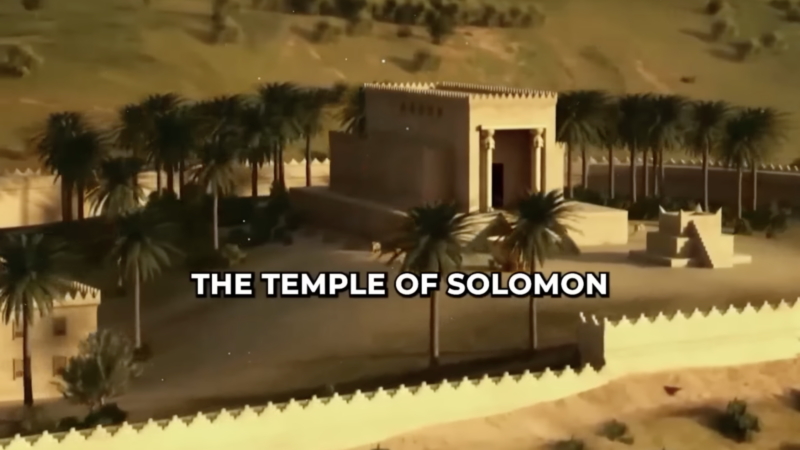
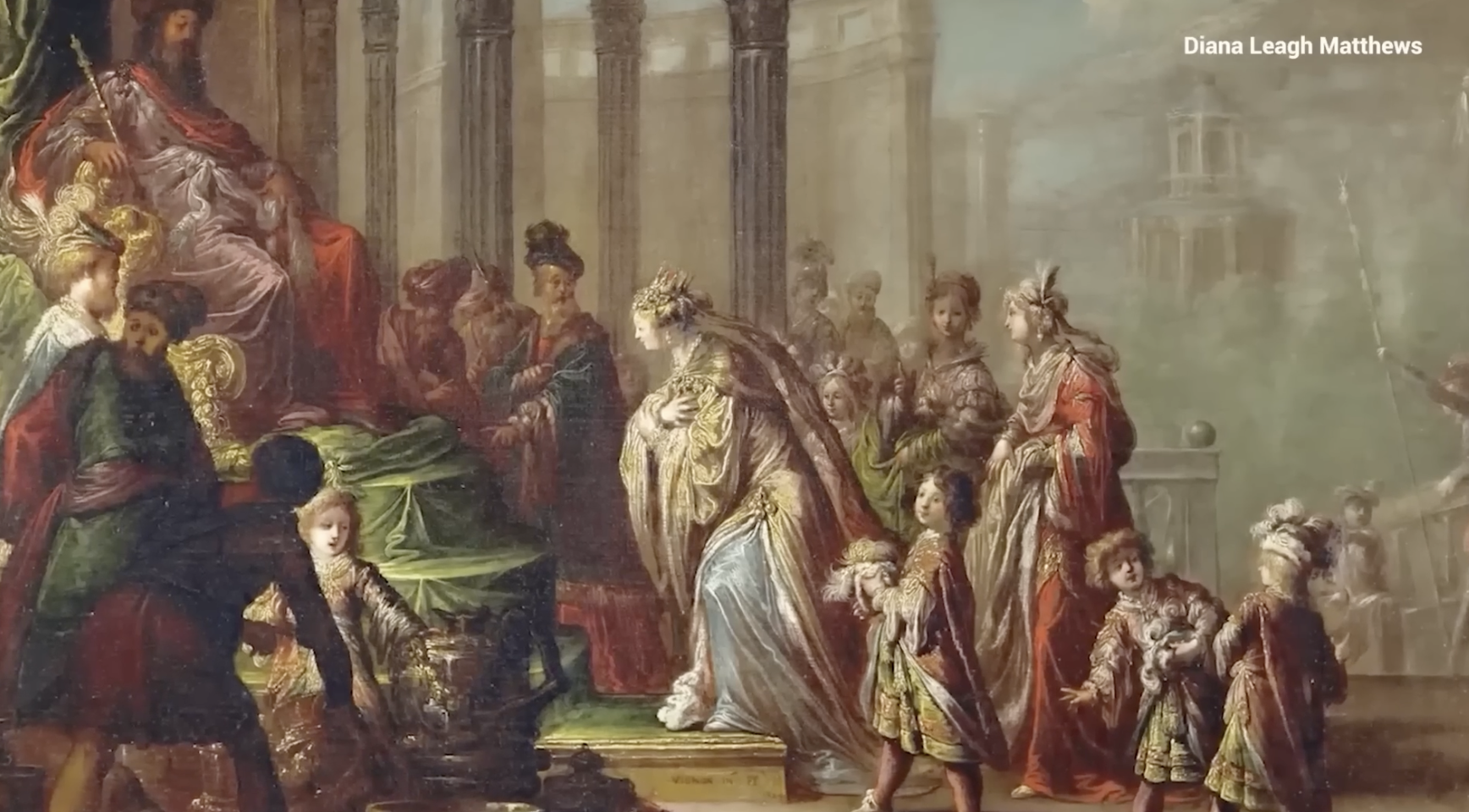
Trade routes stretched across continents. Wealth flowed into the capital from distant lands. Jerusalem became a center of influence, diplomacy and culture. At the heart of his rule stood the first temple built on what is now known as the Temple Mount, constructed with cedar from Lebanon and layered with gold. It was considered one of the most magnificent structures of the ancient world. The stones were cut with such precision that later generations struggled to explain how it was done without modern tools. Solomon's reputation wasn't built on wealth alone. His wisdom became legendary. The story of the two women claiming the same child turned him into a symbol of justice across the ancient Near East. Leaders sought alliances with him. According to tradition, even the Queen of Sheba traveled vast distances to test his wisdom with riddles, leaving impressed by what she witnessed. His reach extended beyond Jerusalem. Ships sailed to distant lands like Ophea in the desert regions, including the Timna Valley, copper production fueled economic growth. Archeologists today still debate the scale of those operations, but evidence shows industrial activity far larger than once assumed. And yet, despite all this documentation, one question haunted historians for centuries, where was Solomon buried? Jerusalem was conquered, destroyed and rebuilt multiple times.
If a royal tomb existed, it should have been looted long ago. Many experts quietly concluded it never existed at all. The story of Solomon's burial became a historical ghost, repeated, but never proven until now. This recent discovery did not come from guesswork. It was the result of decades of re examining texts, geography and overlooked details. What began as a careful excavation has opened the door to something far bigger. Because if this truly is Solomon's tomb, it doesn't just confirm a legend. It challenges long held assumptions about the scale, power and reality of His Kingdom and what lies deeper inside, may raise even more questions than it answers. Two forgotten tunnels change everything. Dr Carter's discovery. For centuries, the search for Solomon's tomb felt like chasing a shadow medieval crusaders tunneled beneath Jerusalem, believing treasure waited below. In the 19th century, European explorers tore through the hills of Judea with picks and shovels, convinced they were inches away from rewriting history. Every effort ended the same way empty chambers collapsed shafts and disappointment by the time the modern era arrived, most serious archeologists had quietly moved on the tomb they assumed was legend that changed when Dr Emily Carter stepped into the story. She was not a treasure hunter. She was a specialist in ancient manuscripts, someone more comfortable in archives than excavation pits. While reviewing administrative records dated to the reign of Solomon, she noticed repeated payments sent to a location that had no official name. The references were precise but intentionally vague, tied to a site near the city of David. It was as if the destination had been erased on purpose. Instead of dismissing the anomaly, she followed it. Her team brought in advanced ground penetrating radar capable of scanning deep beneath layers of limestone. They focused on a steep slope in Silwan, just outside the main excavation zones. The terrain was unstable, the heat relentless, and the rock notoriously difficult to work through. Equipment overheated. Sensors malfunctioned. Progress was painfully slow. Still, the scans began to show faint geometric patterns below the surface, shapes too straight, too deliberate to be natural.
Then nature intervened. A powerful storm swept through the region, soaking the hillside and loosening the soil. When the rain cleared, part of the slope had shifted, revealing a narrow opening that had not existed before. At first glance, it looked insignificant, but the radar readings beneath it told a different story. Hidden below was a network of tunnels, Angular, structured and unmistakably man made. The team understood immediately that this was not random. The passageways were arranged with intention, forming a system that appeared both concealed and defended. As excavation began, they discovered false corridors designed to mislead intruders. Some sections narrowed abruptly, others ended in Dead drops, where a single misstep could trigger collapse. The construction was strategic, almost military. In design, Dr Carter spent hours analyzing markings carved near the primary entrance. These were not decorative flourishes. They were warnings, symbols repeated in a pattern that suggested restricted access, messages intended only for those who understood their meaning. Whoever engineered these tunnels had planned for intruders. They had built protection, not just with stone, but with psychology.
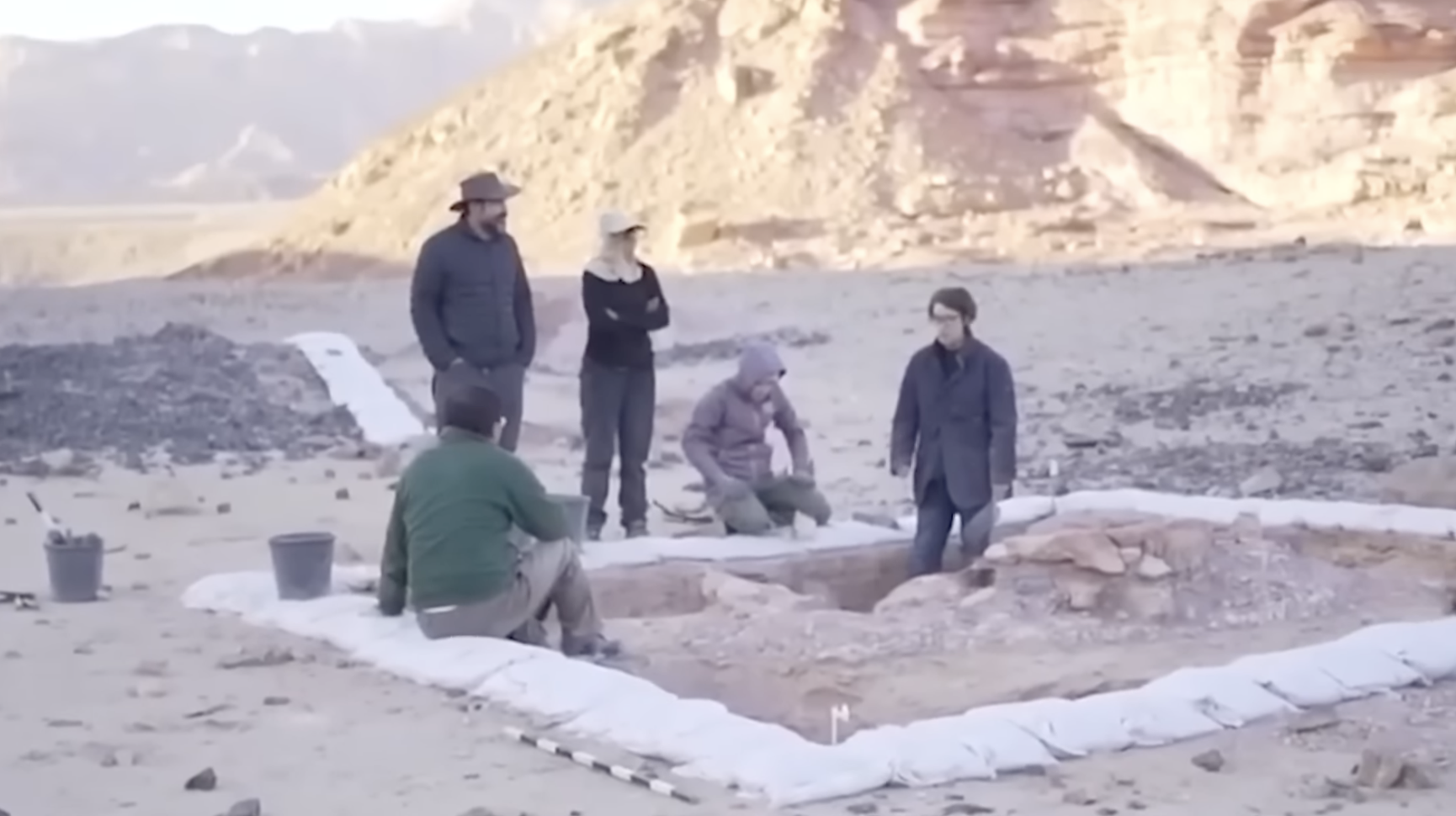
The deeper the team advanced, the more complex the network became. Airflow shifted in unexpected ways, suggesting sealed chambers further inside every measurement pointed to deliberate design, rather than simple burial space. This was not a natural cave adapted for use, it was an engineered labyrinth. For the first time in generations, the possibility felt real. The long dismissed legend no longer seemed impossible. Beneath layers of rock and centuries of doubt, something had been preserved with extraordinary care, and whatever waited at the heart of those tunnels was never meant to be found by accident. The doorway to the ancient world, unlocking the stone slab at the end of the tunnel network, the team finally came face to face with it, a massive stone slab embedded so deeply into the mountain. It looked fused to the Earth itself. This was not random debris. It was engineered, positioned with precision, sealed with intent. The passage leading to it was narrow and unstable, and every movement had to be calculated. The slab was part of a larger locking system carved directly into the limestone. One wrong shift could trigger a collapse. The design was ancient, yet the strategy behind it felt startlingly sophisticated. Whoever built it understood both engineering and human greed near the base of the doorway, Dr Carter identified seven carved lines of symbols.
The number immediately stood out. According to tradition, the First Temple in Jerusalem took seven years to complete under the reign of Solomon, the pattern did not feel decorative. It felt deliberate, almost instructional. The team treated the slab like a live mechanism, rather than a simple barrier. Laser mapping tools scanned every groove and notch. Digital models were built in real time to understand how the stone pieces interlocked. The air inside the tunnel was heavy with dust and dampness as they worked through the night, adjusting pressure points millimeter by millimeter for three days, nothing moved. Then came the sound a sharp internal snap followed by a deep grinding vibration that echoed through the passage, the slab shifted slightly, just enough to break the seal, a narrow opening appeared, revealing complete darkness beyond it, the silence that followed felt overwhelming. No one spoke the moment carried the weight of centuries, the opening widened slowly. Beyond It was a chamber untouched by light for millennia. History was no longer theoretical. It was waiting on the other side of that threshold a glimpse at Solomon's wealth, the golden chamber, the first beam of light entered the chamber and struck gold, not scattered fragments, not looted remains, entire objects preserved and intact. Along the walls stood golden vessels engraved with ancient Hebrew script, their surfaces reflected light as if polished recently. The air inside was unexpectedly fragrant, carrying faint traces of resins and spices that had somehow endured the centuries.
At the far end of the chamber stood a seven branched menorah, formed from solid gold. Its proportions matched early descriptions of sacred temple furnishings. The craftsmanship was detailed and balanced, suggesting elite artistry, if authentic, it could reshape current understanding of Temple era design. The Room held far more than ceremonial pieces ivory carvings rested beside fragments of fine textiles. Decorative boxes contained gemstones, emeralds, rubies and deep blue lapis lazuli, the variety of materials hinted at an extensive trade network reaching far beyond ancient Israel's borders. One sealed clay jar was carefully opened under controlled conditions, a faint aroma escaped, spices consistent with saffron and frankincense. The preservation was astonishing, yet alongside the excitement came uncertainty. Some symbols etched into the walls did not match known inscriptions from Solomon's era, certain artistic styles appeared slightly later in origin. Questions surfaced quickly. Was this truly Solomon's burial chamber, or was it a royal vault reused by later rulers? The team documented everything using high resolution 3d scanning before disturbing a single object. Precision was critical. A discovery of this magnitude demanded restraint. One fact became clear, no human remains were present in this chamber. The layout felt transitional, almost ceremonial. Antechamber rather than final tomb on the far wall, additional markings directed attention downward, deeper into the mountain. The gold impressive as it was, suddenly felt secondary. If this was only the outer layer, then the true secret of Solomon's resting place might still lie hidden below the unexplainable symbols and hidden knowledge.
The gold was overwhelming, but it wasn't what stopped the team cold. It was the writing once the first wave of excitement settled, Dr Carter's group shifted their focus from the treasure to the far wall of the chamber, there, carved deep into the limestone, was a cluster of symbols unlike anything previously documented in confirmed Iron Age contexts, the grooves were sharp, deliberate and arranged with mathematical precision. At the center sat a six pointed star seal often associated with later traditions as the Seal of Solomon. Here, however, it appeared not as decoration, but as a structural focal point. Lines radiated outward from it in geometric patterns, interlocking triangles, spirals and angular grids that seemed governed by strict ratios. One of the team's mathematicians noticed something striking, several proportional relationships embedded in the design aligned with patterns consistent with what we now call the Fibonacci sequence, whether intentional or coincidental. The complexity was undeniable. The carvings did not resemble simple royal iconography. They looked systematic, almost architectural in concept. Around the seal were inscriptions in early Semitic script, but the syntax was irregular, instead of linear phrasing, certain symbols looped and intertwined forming repeating cycles, it was as though the text had been structured to be read in multiple directions. Linguists documented everything carefully hesitant to assign meaning too quickly in one corner of the chamber, partially concealed behind stone fragments. They uncovered a set of clay tablets. Many contained ordinary administrative records, lists of imported cedar from Lebanon, inventories of spices, measurements of metal. These were consistent with what would be expected in a royal archive, but one tablet stood apart. Its script did not follow known grammatical patterns. The symbols curved inward, layering over one another in a recursive format. It resembled a coded matrix more than a narrative text. The arrangement suggested intentional encryption, knowledge designed to be concealed unless the reader understood its structure. Among the translated fragments were repeated references to a key connected to wisdom and guarded knowledge. The phrasing echoed later mystical traditions associated with the so called Key of Solomon, a text long dismissed by historians as medieval legend, yet here in a sealed chamber, was something older that hinted at the origin of that tradition. Speculation began circulating carefully within the team.
Could Solomon's reputation for wisdom have stemmed not only from governance and diplomacy, but from advanced knowledge preserved in coded form, the geometric carvings, the mathematical consistency, the layered script, all pointed toward deliberate intellectual design, still caution prevailed. Extraordinary interpretations required extraordinary evidence. The team focused on documentation, scanning each symbol in high resolution before drawing conclusions. What was clear, however, was that this chamber held more than wealth. It preserved ideas, encoded, protected and possibly misunderstood for centuries, and if the symbols were only the beginning, then the true revelation might not be gold at all, but knowledge hidden in plain sight beyond the golden bait, the mysterious chest, it was discovered almost by accident, tucked into a recessed shadow along the chamber wall sat a compact chest, roughly the size of a suitcase. Unlike the golden artifacts surrounding it, this object was made from a dull gray alloy that showed no visible corrosion.
Its surface was smooth, nearly seamless, marked only by the same six pointed star symbol carved elsewhere in the room. There were no visible hinges, no traditional lock, no external keyhole. The atmosphere shifted immediately until this moment the finds had felt historical ceremonial objects, inscriptions, preserved goods. This chest felt different. Its weight was extraordinary for its size. Thermal scans suggested a faint residual warmth, though no external energy source was visible. The team gathered cautiously. No one reached out at first, ancient traditions speak of Solomon commanding forces beyond ordinary understanding, including legends of sealed vessels containing bound entities. Most scholars interpret those accounts symbolically, but standing before a sealed container marked with royal insignia, speculation became harder to ignore. Was it simply a secure archive box, a container for Sacred documents, or something designed to protect its contents from both decay and intrusion? Debate broke out over whether to open it immediately or transport it to a controlled laboratory environment. If the carvings on the wall were protective warnings, this chest could represent the true focal point of the chamber. The gold might have been ceremonial, impressive, but secondary. The markings suggested intentional concealment, not display whatever lay inside had been sealed with extraordinary care, whether it contained scrolls, relics or something entirely unexpected. It was clearly meant to endure, and the decision to open it would not just answer questions it could raise, far more than anyone in that chamber was prepared for the crime scene evidence of modern intrusion.
As preparations began for a portable scan of the sealed chest, one detail shifted the entire tone of the discovery on a stone pillar near the edge of the chamber, partially hidden in shadow was a carving that did not match the surrounding script. Unlike the ancient grooves worn smooth by time, this mark was sharp and shallow. Its edges were clean recent. The symbol resembled a compass and square geometric deliberate, but its lines carried an oddly modern precision, almost mechanical in symmetry. It did not belong to the 10th century BCE. It didn't even look medieval. It looked contemporary. The implication was immediate and unsettling. Someone else had entered this chamber long after it was sealed, the site was no longer just an archeological breakthrough. It had become a potential breach. If modern tools had been used to access or mark the chamber, then the secrecy surrounding Solomon's resting place had already been compromised.
The team documented the carving, carefully photographing and scanning it before anyone speculated publicly, questions multiplied, had another expedition reached this chamber and kept it hidden? Was the chest examined before and deliberately left behind? Or had someone entered recently marking the site for reasons unknown, whatever the answer, one truth was clear, this was no longer just ancient history. The mystery extended into the present. The final question, Should we open the chest the oxygen monitors began to signal declining air quality, but no one moved toward the exit. The Sealed chest remained at the center of the chamber, silent and undisturbed. Every artifact discovered so far could be studied, cataloged and interpreted within historical frameworks, but this object felt different, its construction, its preservation, even its placement, suggested intentional protection beyond ordinary burial customs. If transported to the surface, it would immediately become one of the most scrutinized objects in the world, governments, religious authorities, historians and scientists would demand access whatever it contained, documents, relics or something entirely unexpected, would shape global conversation.
Overnight, the team faced a decision that was no longer just scientific. Some knowledge transforms understanding. Other knowledge destabilizes it. If this chamber had remained sealed for three millennia, perhaps that was by design, the question now was simple but heavy with consequence, are we ready to open it? Let us know what you think in the comments